Dat Nguyen
Research Scientist II, Basis Research Institute · Research Associate, Harvard SEAS

Short bio
I am a Research Scientist II at the Basis Research Institute and a Research Associate at Harvard’s Programming Languages and Formal Methods groups.
I am boardly interested in the the modeling of how we perceive the world, and the modeling of reasoning processes. To support this goal, I work in the emerging area between programming language, machine learning, and probabilistic programming language.
At Basis, I work on modeling uncertainty in symbolic world models in MARA, designing a robot design language that captures both morphology and control in R-ADA, and modeling LLM generation as an effect, as a framework for building agent harnesses, in effectful. At Harvard, I work on proof automation in Lean and causal systems for drug repurposing.
I completed my PhD doing machine learning and program synthesis-based debugging, and previously worked on computer vision problems: visually rich document information extraction.
Research interests
- World models: learning, evaluation, and uncertainty
- Languages and abstractions for robot design and LLM agents
- Program synthesis and probabilistic programming
- Neuro-symbolic systems modeled with LLMs, PPLs, and NNs
- Reliable, explainable ML for software, including graph-based learning for code and documents
News
- Starting today, I am a Research Scientist II at the Basis Research Institute, and I continue as a Research Associate at Harvard SEAS.
- Our paper, The Scaffolding Paradox: Evidence from AI-Assisted Dafny Proof Synthesis, is accepted at SEFM’26.
- Delivered a talk on WorldTest and AutumnBench at TAIC’26 (Thinking about AI’s Capability), a pre-ICML workshop at GIST. Check out the slides here and the blogpost here.
Technical blogs
- WorldTest: how do we know whether an AI has learned how a world works?. My TAIC’26 talk, linearized into a story, with live environments you can play.
- Grammars that generalize. Duy and I combined a small grammar with a neural network so bird recognition survives domain shift.
- Bayesian Synthesis. Synthesizing probabilistic programs that model data automatically. I reproduced part of it.
Project demos
 | NeuroSymbolicDG Domain-invariant classifier head for fine-grained bird recognition, via a PCFG over spatial layouts. code · paper · blog · checkpoints |
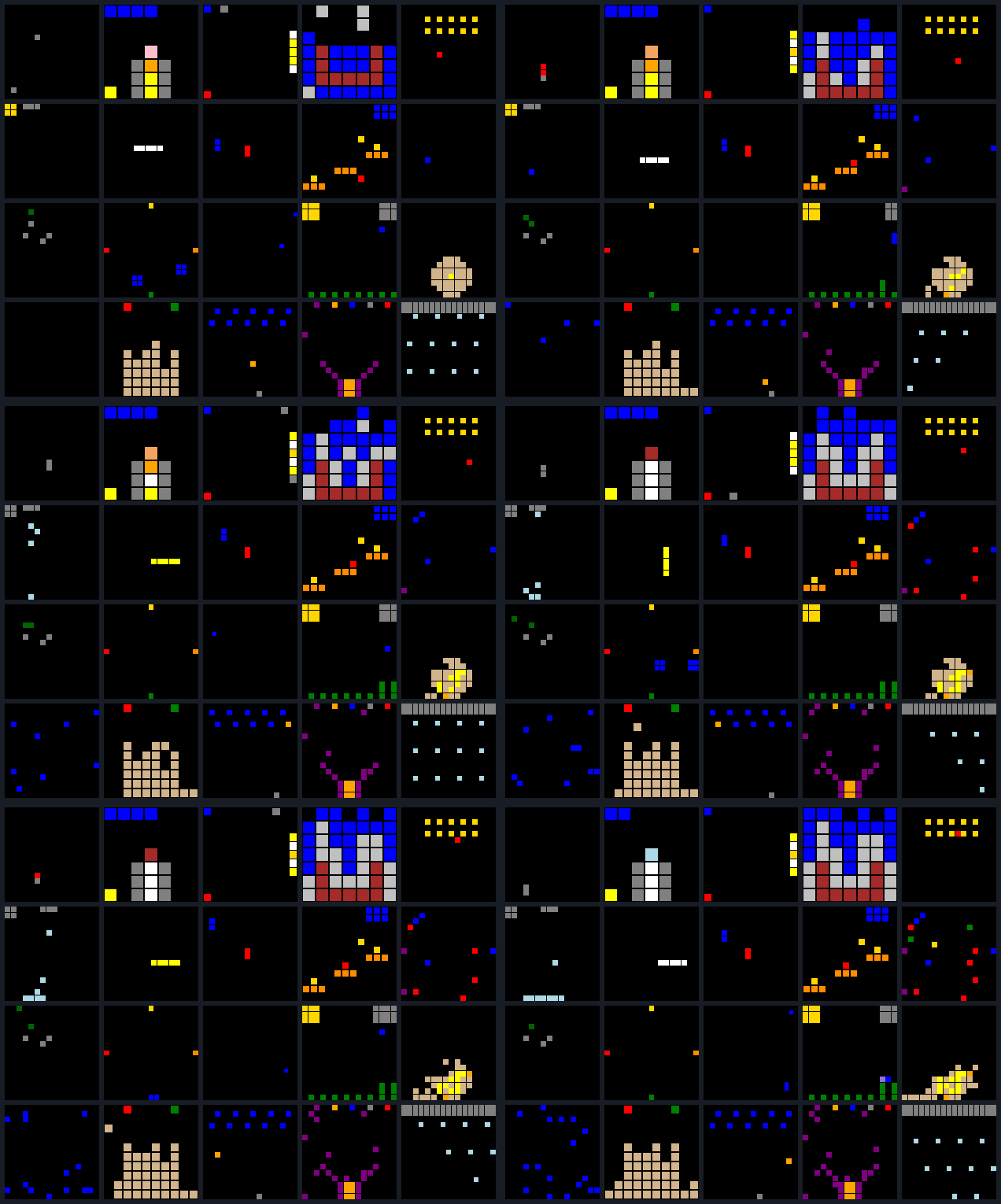 | Autumn.cpp (ICML '26) Autumn interpreter in C++. Powers MARA and AutumnBench. Try it live in the playground. code · AutumnBench paper · blog · playground |
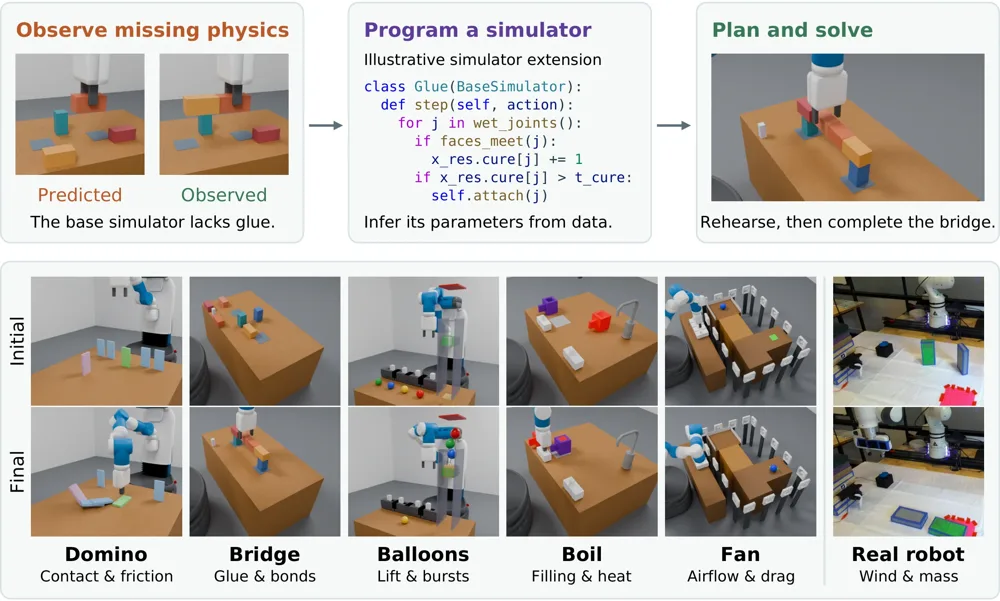 | EMPIRIC (arXiv '26) Robots that extend a physics engine with code for the physics it is missing, fit it from a few noisy experiments, and plan with it. code · paper · project |
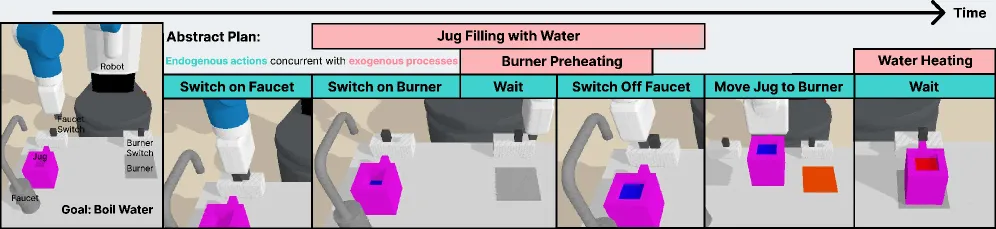 | ExoPredicator (ICLR '26) Learning abstract models of dynamic worlds for robot planning. paper · openreview |
 | VRDSynth (ISSTA '24) Program synthesis for multilingual document information extraction. code · paper |
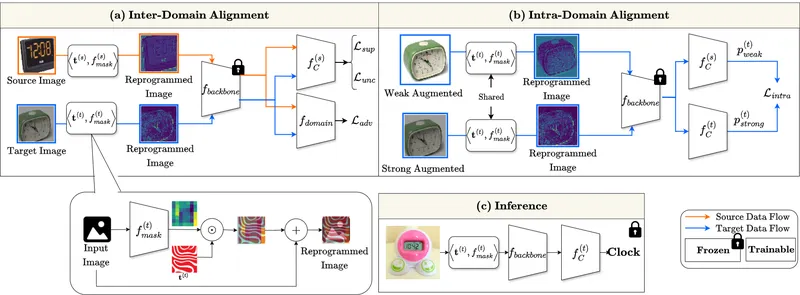 | VirDA (TMLR '25) Unsupervised domain adaptation by reusing the backbone with visual reprogramming. code · paper |
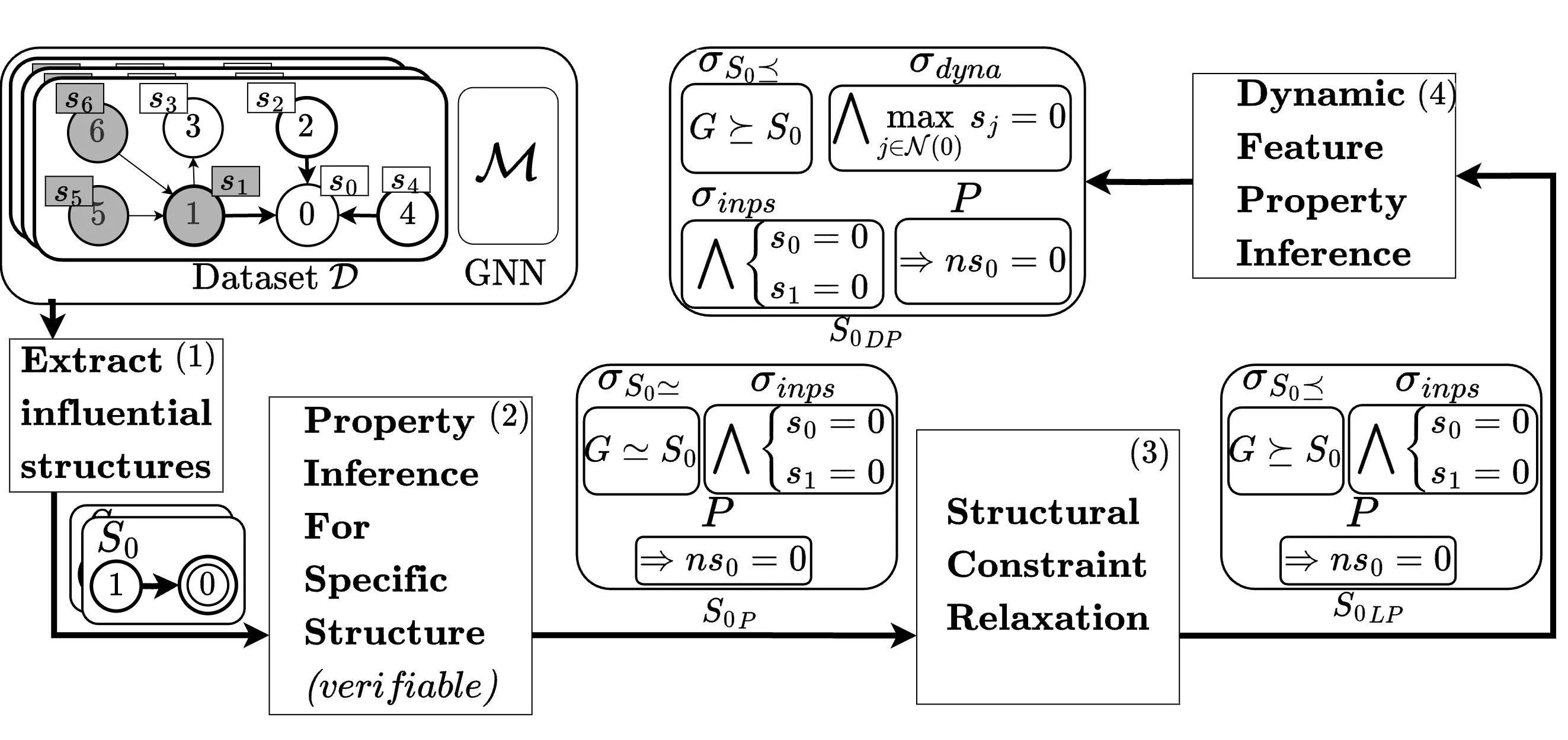 | GNNInfer (ICSE '22, arXiv '24) Inferring properties of graph neural networks. paper |
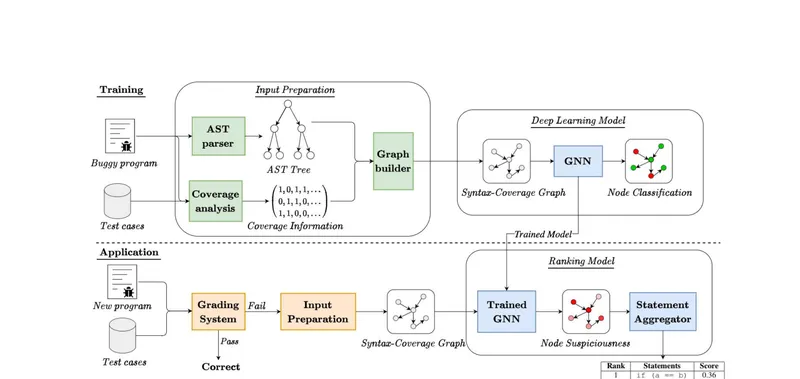 | FFL (ICSME '22) Fine-grained fault localization for student programs. code · paper |
Positions
Selected Publications
- SEFM '26The Scaffolding Paradox: Evidence from AI-Assisted Dafny Proof Synthesis. .
- arXiv '24Inferring Properties of Graph Neural Networks. .
- ICSME '22FFL: Fine grained Fault Localization for Student Programs via Syntactic and Semantic Reasoning. .
- ICSE '22Toward the Analysis of Graph Neural Networks. .
- ICPR '20End-to-End Hierarchical Relation Extraction for Generic Form Understanding. .
- MAPR '20PCA-based 3D Facial Reenactment From Single Image. .
- BMVC '19End-to-End Information Extraction by Character-Level Embedding and Multi-Stage Attentional UNet. .